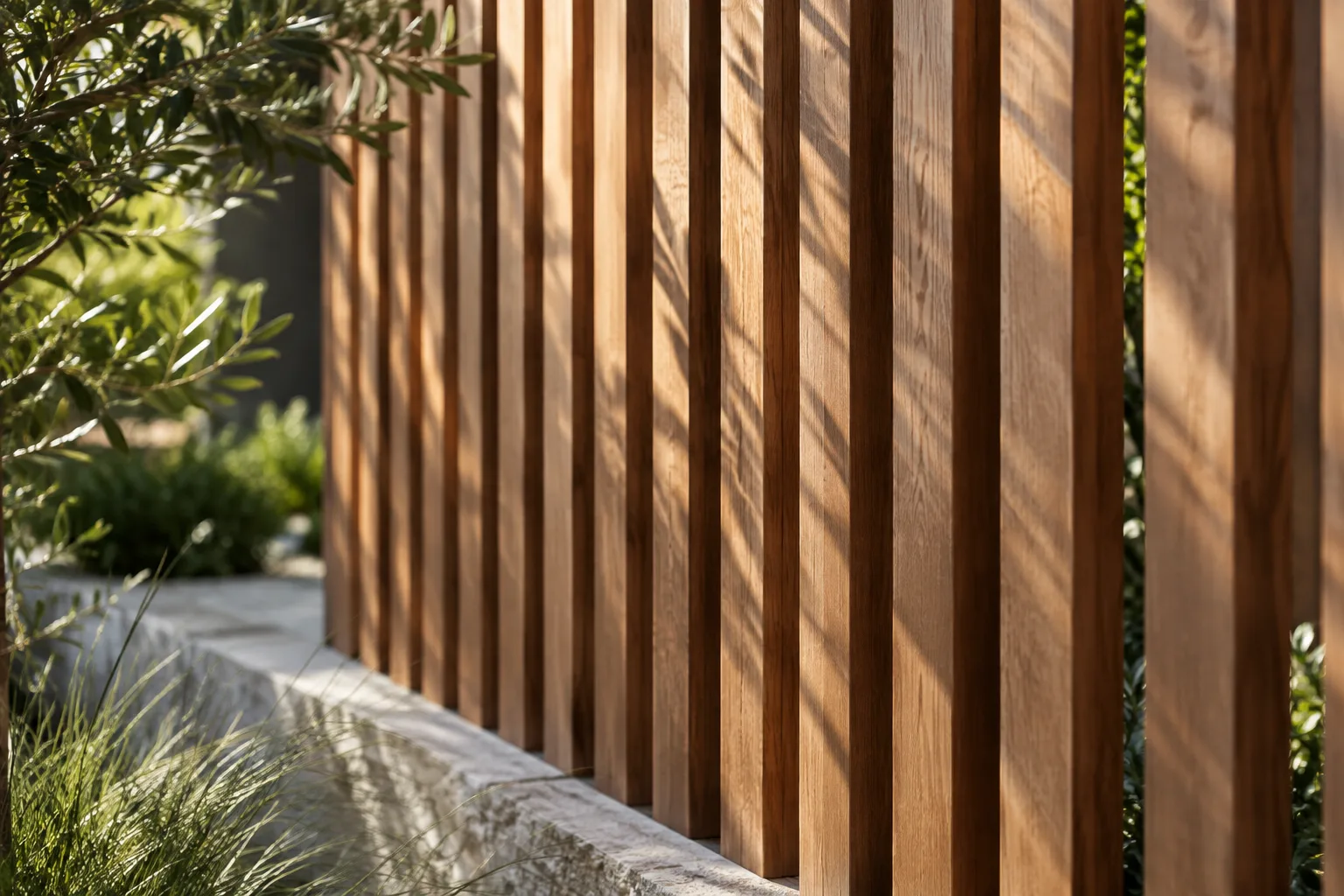
Choose hardwood boards using actual dimensions and the intended exterior application, not a species name alone. A useful product discussion includes face width, thickness, edge profile, available lengths and the appearance you expect across a complete fence rather than a single sample.
Define the visible result
Decide whether varied color and grain are welcome or whether the installation should distribute stronger contrasts evenly. View several samples in comparable light and remember that one piece cannot represent an entire order. Note whether both fence faces are important. For a boundary beside a patio, the back face may be visible through gaps or from a garden path, so a one-face appearance assumption can create a disappointing result.
Ask dimension questions early
Request actual finished measurements, available length ranges and the relevant product instructions. Compare those lengths with your panel cut list before choosing a board width solely for appearance. Describe exposed ends, planned trim and the intended fastener system. Ask the supplier to identify whether the proposed product is appropriate for this use. A decking profile should not automatically become fence infill without considering how its edges, grooves and fixing requirements affect the assembly.
Make substitutions reviewable
Write the selection into the material schedule with species or product identification, dimensions and profile. If a substitute is offered, compare it against the layout, gap mockup and fastening detail rather than accepting a matching nominal size. Request confirmation of current availability before finalizing the cutting plan. Keep representative spare pieces where practical and label them with the order information. That record will be more useful for a future repair than trying to identify a weathered board from its color alone.
Evidence & scope
Original planning guidance. References support their stated technical scope; examples and workflows do not establish product approval.