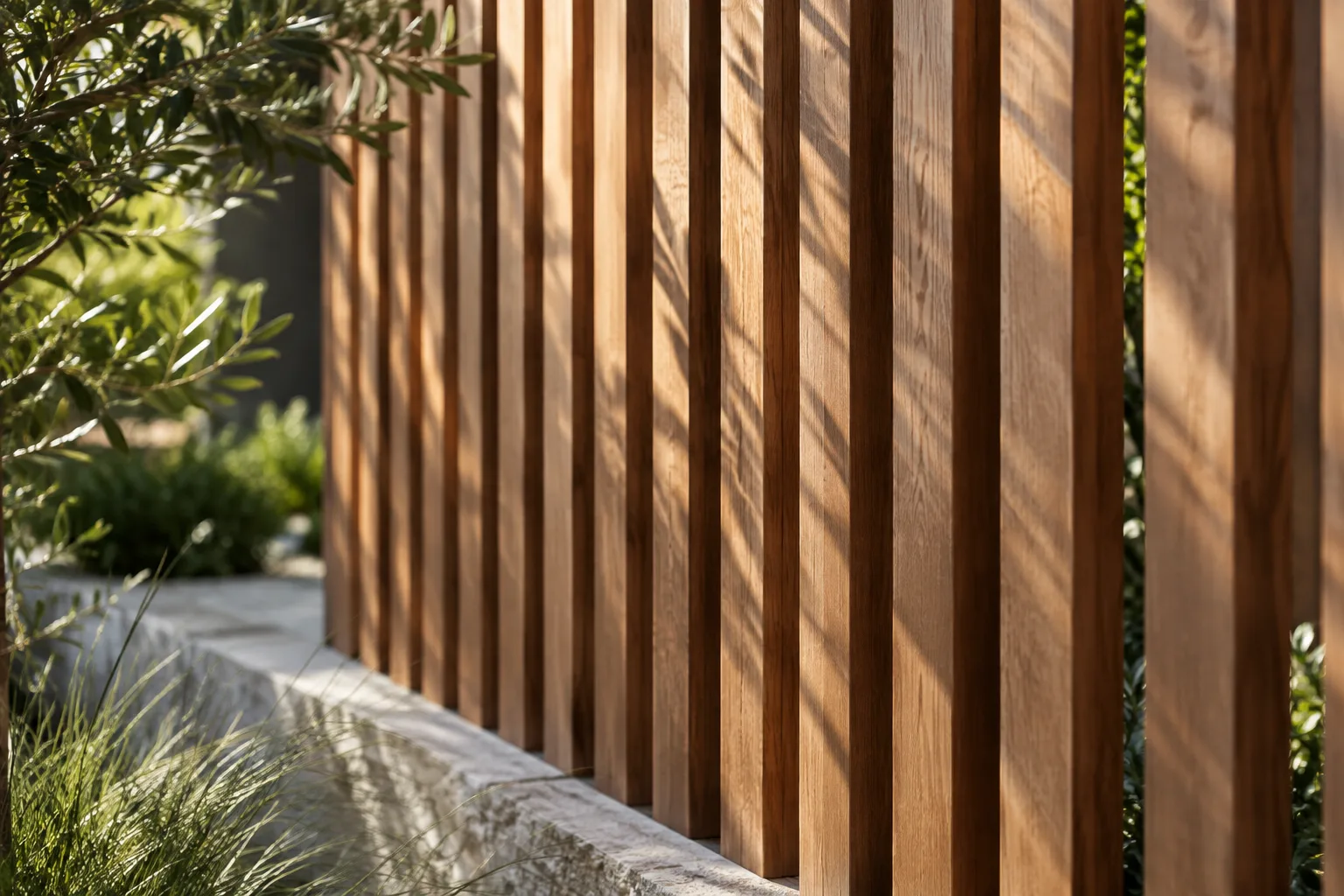
A maintenance plan begins with physical access. Decide how both faces, gate edges and tight corners will be reached after furniture and planting are in place. Then keep the installed product and finish information together so future work can follow the correct instructions.
Walk the finished boundary
Imagine the landscape several seasons after installation. Note shrubs, raised beds, stored bins and narrow spaces that may obstruct inspection or brushing. Identify any face that requires coordination with a neighbor for access. For a courtyard fence, check whether large furniture must move before the corner can be reached. Solve those practical problems while the layout is flexible, rather than discovering them when a coating needs attention or a board needs replacement.
Use a condition-based routine
Periodically look for loose pieces, unusual discoloration, trapped debris and changes in gate operation. Review the fence after events that may have affected it and address problems through an appropriate installer when needed. Choose cleaning and finish procedures from the actual product instructions. Avoid promising a universal annual treatment interval: exposure, appearance goals and the finish system influence the work. Keep observations brief and dated so recurring issues are recognizable.
Keep a small ownership file
Save the final elevation, board identification, hardware models and finish name with color and batch information when available. Add cleaning instructions and photographs of the completed assembly. Label spare boards and store them according to supplier guidance. When a repair occurs, note its location and any product change. This simple record helps the next contractor match the intended detail and prevents a maintenance visit from becoming a fresh investigation into what was originally installed and why.
Evidence & scope
Original planning guidance. References support their stated technical scope; examples and workflows do not establish product approval.