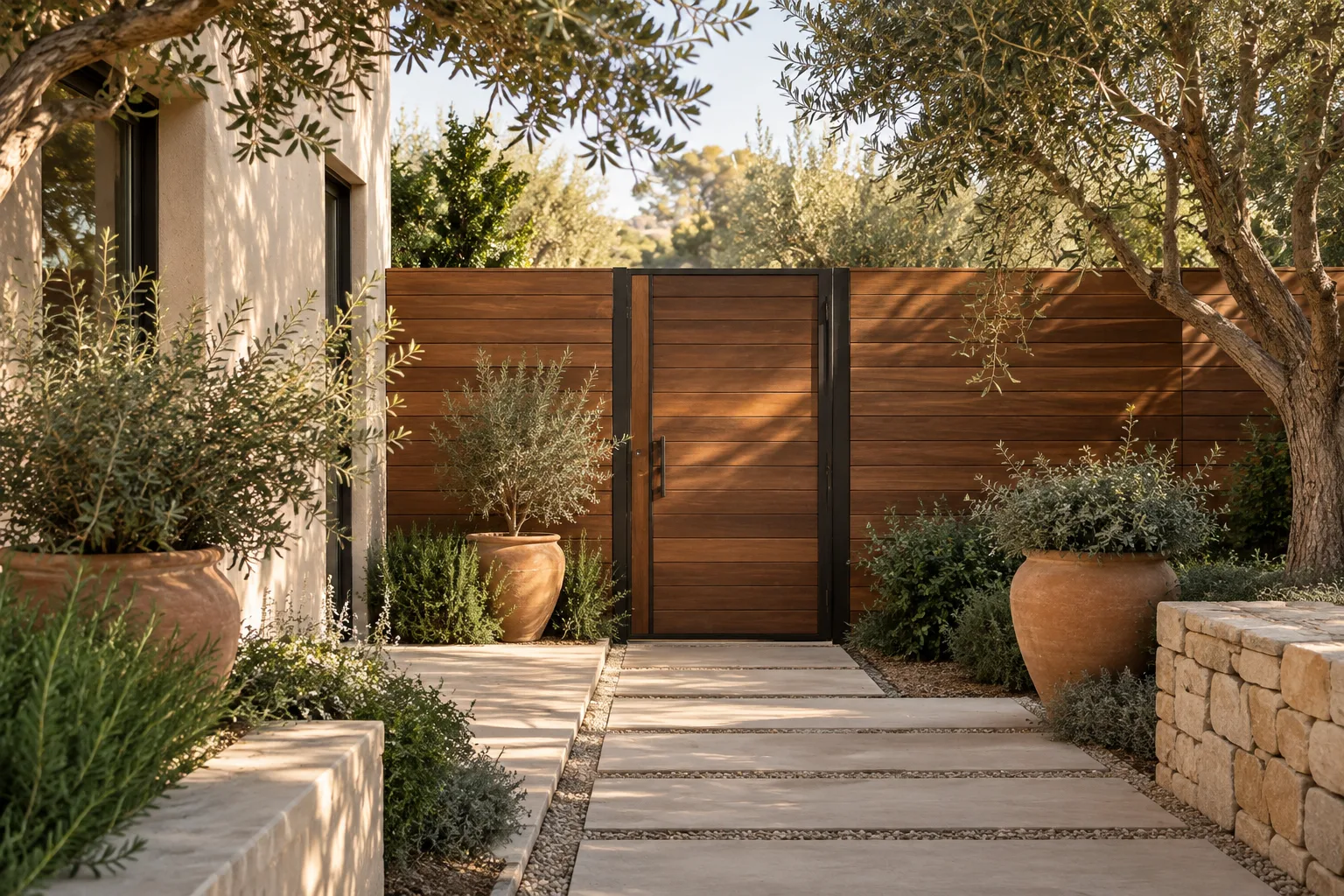
Board direction changes the fence's visual rhythm and the way it meets gates and corners. Compare a small elevation of both options using the same site dimensions before choosing. Neither orientation automatically solves privacy, durability or support requirements.
Read the whole elevation
Horizontal boards emphasize the length of a run and make changes in level easy to notice. Vertical boards establish a repeated upright rhythm and can make differently sized panels feel more consistent. Draw the entire visible boundary, including its shortest return. A single attractive panel can be misleading when repeated beside a wide gate, a narrow leftover bay or a change in ground level. Choose a deliberate location for any interruption.
Test the lived view
For a patio beside a path, stand at the dining table and then walk the path. Ask where eyes meet the proposed openings, especially when viewed diagonally. Use strips of cardboard or several loose boards to compare the two arrangements. Look from both sides and from the house. Record which views need screening and which can remain open; one uniform infill pattern may not be necessary along the whole boundary.
Resolve transitions before ordering
Sketch the corner treatment, gate perimeter and last panel for each option. Mark actual face width, intended gaps and visible trim without treating that sketch as a framing design. Ask the installer to identify how the selected infill attaches to the independently specified support system. Compare cut lengths and offcuts between the two layouts. Save the chosen elevation with the material schedule so a later substitution does not quietly alter the pattern.
Evidence & scope
Original planning guidance. References support their stated technical scope; examples and workflows do not establish product approval.